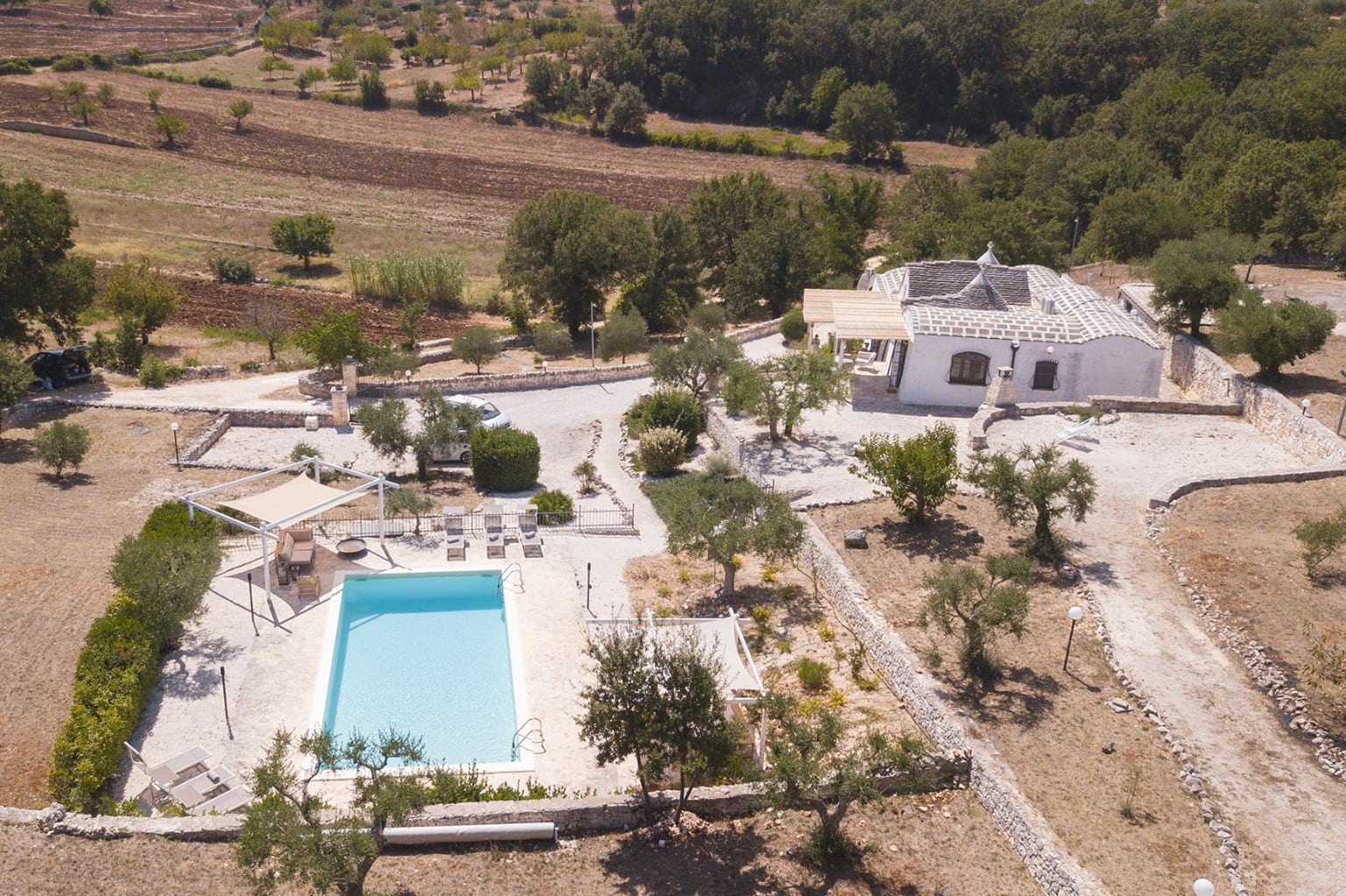
Buying a home in Puglia, whether it is a hidden trullo among the olive trees of the Itria Valley or a historic masseria in Salento, is a dream for many international buyers. However, that dream often comes face-to-face with Italy’s complex tax bureaucracy.
Fortunately, the Italian government offers substantial tax breaks known as “Agevolazioni Prima Casa” (Primary Residence Tax Benefits). These can turn a significant investment into concrete savings on your purchase taxes. But how do these benefits actually apply to the Apulian real estate market?
In short, these are fiscal incentives designed for those who plan to make the property their main home. In a region like Puglia, where property types and prices vary wildly, understanding these tools can make a massive difference to your final closing costs.
What are the “Prima Casa” Benefits and Who Can Apply?
These tax breaks are not granted automatically. To claim them, you must explicitly declare during the deed signing (il rogito) before the Notary that you meet three specific legal requirements:
- Residency: The property must be located in the Municipality (Comune) where you already reside, or where you officially commit to moving your residency within 18 months from the date of the deed.
- Exclusive Ownership: You must not own any other residential property within the same Municipality.
- No Prior Subsidies: You cannot own another home anywhere in Italy that was purchased using these same prima casa tax breaks (though there is an important exception, which we will cover below).
A major point of confusion for buyers moving from the US, UK, or EU is whether owning a home in their native country disqualifies them.
The answer is no. The Italian tax authority (Agenzia delle Entrate) exclusively looks at property registrations within the Italian national territory. If you own one or multiple residential properties outside of Italy, you are still fully eligible for the prima casa tax breaks on your first Italian purchase. Non-Italian citizens access these benefits on equal terms, with no nationality requirements.
Special Notice for Italian Expats (AIRE Registered)
If you are an Italian citizen living abroad and registered with AIRE, the rules underwent a radical shift recently. You can no longer automatically claim the tax break anywhere in Italy just by virtue of your citizenship. To buy a home in Puglia with prima casa benefits without moving your residency back within 18 months, you must cumulatively prove that:
- You moved abroad specifically for documented work reasons.
- You previously lived or worked in Italy for at least 5 years.
- The property you are buying is located in your Municipality of birth, your last municipality of residence before moving abroad, or the municipality where you went to school/university.
If you don’t fit into this specific loop, your safest path is the standard one: committing to moving your legal residency to the local Apulian municipality within 18 months.
Can I Buy a Trullo with First Home Tax Benefits?
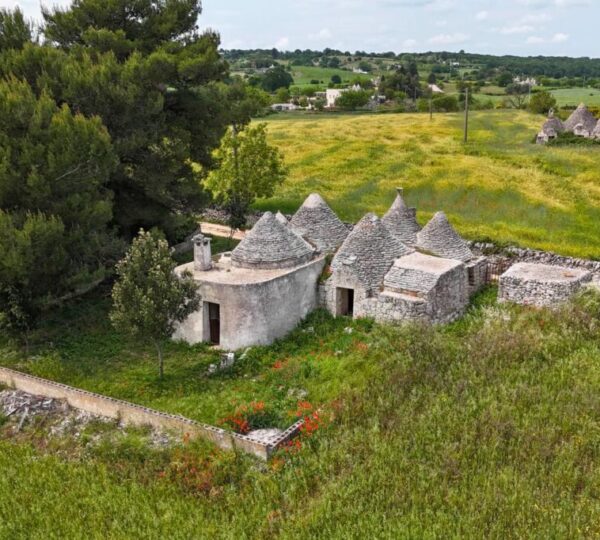
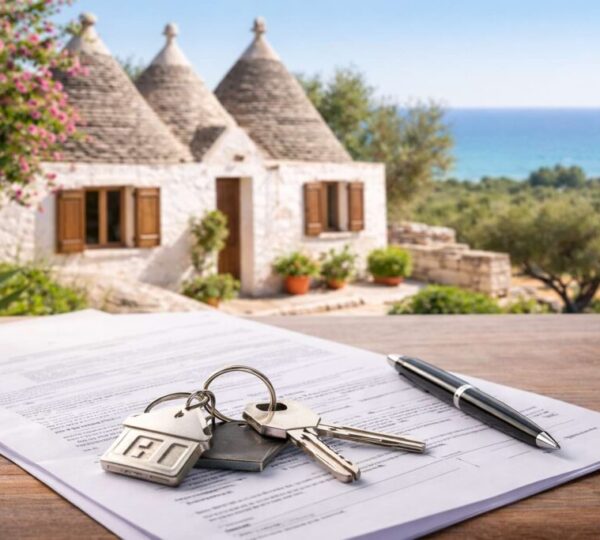
This is one of the questions we hear most often from international buyers exploring the Puglia property market and the answer is yes, in most cases.
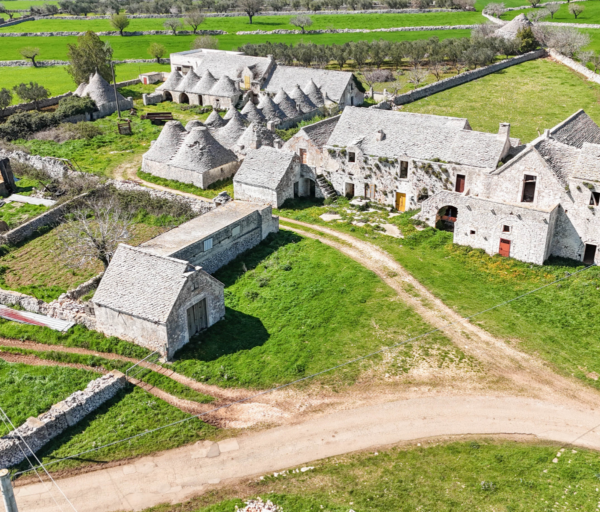
The Italian Revenue Agency (Agenzia delle Entrate) excludes from the relief only properties classified as luxury: category A/1 (high-end urban residences), A/8 (villas) and A/9 (castles and historic palaces of artistic merit). Category A/11 – covering dwellings typical of the local architectural tradition – is expressly included, and this is precisely where most residential trulli are registered.
One important caveat: some prestigious historic properties may fall under A/9, which would exclude the benefit regardless of the purchase price or the buyer’s intentions. Always verify the cadastral category of the property before proceeding. An experienced local estate agent can help you do this well in advance, avoiding any unpleasant surprises on the day of the deed.
How Much Do You Actually Save? The Taxes Explained
The financial advantage lies in a massive reduction of the transaction taxes due when the property title is transferred.
When you buy a property in Italy, there are four main taxes to consider:
- Imposta di Registro (Registration Tax): The main tax, calculated on the cadastral value of the property (not the market price). Normally, this is 2% for the first home; it’s 9% for the second home.
- Imposta Ipotecaria (Mortgage Tax): A fee to register the transfer in the public land registry.
- Imposta Catastale (Cadastral Tax): A fee to update the Land Registry records with your name.
- Imposta di Bollo (Stamp Duty): Levied on notary deeds and related documents.
Here is how the costs change when you qualify for the prima casa benefits:
Buying from a Private Owner (Resale Property)
| Without Prima Casa Benefits | With Prima Casa Benefits | |
| Registration Tax (Imposta di Registro) | 9% | 2% |
| Mortgage Tax (Imposta Ipotecaria) | €50 | €50 |
| Cadastral Tax (Imposta Catastale) | €50 | €50 |
| Stamp Duty (Imposta di Bollo) | Exempt | Exempt |
Buying from a Developer/Company (New Build or Fully Renovated)
| Without Prima Casa Benefits | With Prima Casa Benefits | |
| VAT (Paid to the vendor) | 10% | 4% |
| Registration Tax (Imposta di Registro) | €200 (fissa) | €200 (fissa) |
| Mortgage Tax (Imposta Ipotecaria) | €200 (fissa) | €200 (fissa) |
| Cadastral Tax (Imposta Catastale) | €200 (fissa) | €200 (fissa) |
| Stamp Duty (Imposta di Bollo) | 230€ | Non dovuta |
A Practical Example: Buying from a Private Owner
Imagine buying a traditional trullo in the Itria Valley with a cadastral value of €103,000. Thanks to Italy’s prezzo-valore (price-value) system—which allows taxes to be calculated on the lower cadastral value rather than the actual purchase price—the savings are immediate:
- Without Benefits: 9% of €103,000 = €9,270 in registration tax, plus €100 in fixed mortgage and cadastral taxes. Total: Approx. €9,370.
- With Prima Casa Benefits: 2% of €103,000 = €2,060 in registration tax, plus the same €100 in fixed taxes. Total: Approx. €2,160.
Net Savings: Over €7,200 on just one single tax item.
Crucial Legal Updates for 2026
The legal framework surrounding these benefits has recently changed, offering significantly more flexibility for international buyers.
The most vital update affects those who already own a prima casa property in Italy but want to upgrade to a different one. Under Article 1, paragraph 116 of the 2025 Budget Law (Law no. 207/2024), the deadline to sell your pre-existing Italian home has been extended from one to two years from the date of your new purchase deed.
This applies also to foreign citizens. Italian tax law makes no distinction based on nationality. If you are an expat navigating an international move, perhaps coordinating the sale of a property back home while managing a transition within Italy, this extended two-year window provides much-needed breathing room to complete your transactions without losing your tax discounts or facing penalties.
Furthermore, if you sell your previous primary Italian home and buy a new one within 12 months, you remain entitled to a tax credit equal to the registration tax (or VAT) paid on your original purchase, which the Italian government will offset against your new transaction.
The CONSAP Mortgage Guarantee Fund (Active until 2027)
If you are looking to finance your first Apulian property with an Italian mortgage, the First Home Guarantee Fund, managed by the state entity CONSAP, is operational until December 31, 2027.
This program provides a state-backed guarantee covering 50% of the mortgage principal (up to €250,000) for all eligible primary residence purchases, allowing banks to grant high loan-to-value (LTV) mortgages. For buyers under 36 with an ISEE income indicator below €40,000, the state guarantee scales up to 80%.
While the CONSAP fund is legally accessible to non-Italian citizens, it specifically applies to expats who are already legally residing and working in Italy at the time of the mortgage application. Non-EU applicants must hold a valid Italian residence permit (permesso di soggiorno or carta di soggiorno).
If you are buying a home in Puglia while currently living outside of Italy, you will not be eligible for the CONSAP fund. Instead, your purchase will be financed through standard international mortgage channels offered by Italian or international banks.
Safely Navigating Your Apulian Property Purchase
Purchasing a piece of local heritage like a trullo or a masseria requires deeper due diligence than buying a standard modern apartment. Beyond verifying the cadastral category, you must ensure the property’s official legal destination is residential and free of building code violations.
A trullo already registered as a home (A/11) is generally straightforward. Conversely, a historic palace classified as an A/9 luxury monument will not qualify for these specific discounts, regardless of its price or your intentions.
This is where having a locally rooted professional by your side changes everything. From conducting cadastral checks and navigating Italian notary laws to optimizing your mortgage applications, expert guidance ensures a smooth transition. Trulli & Dimore Real Estate was founded to do exactly this: guide international buyers who choose Puglia not just as a vacation spot, but as the place they call home.