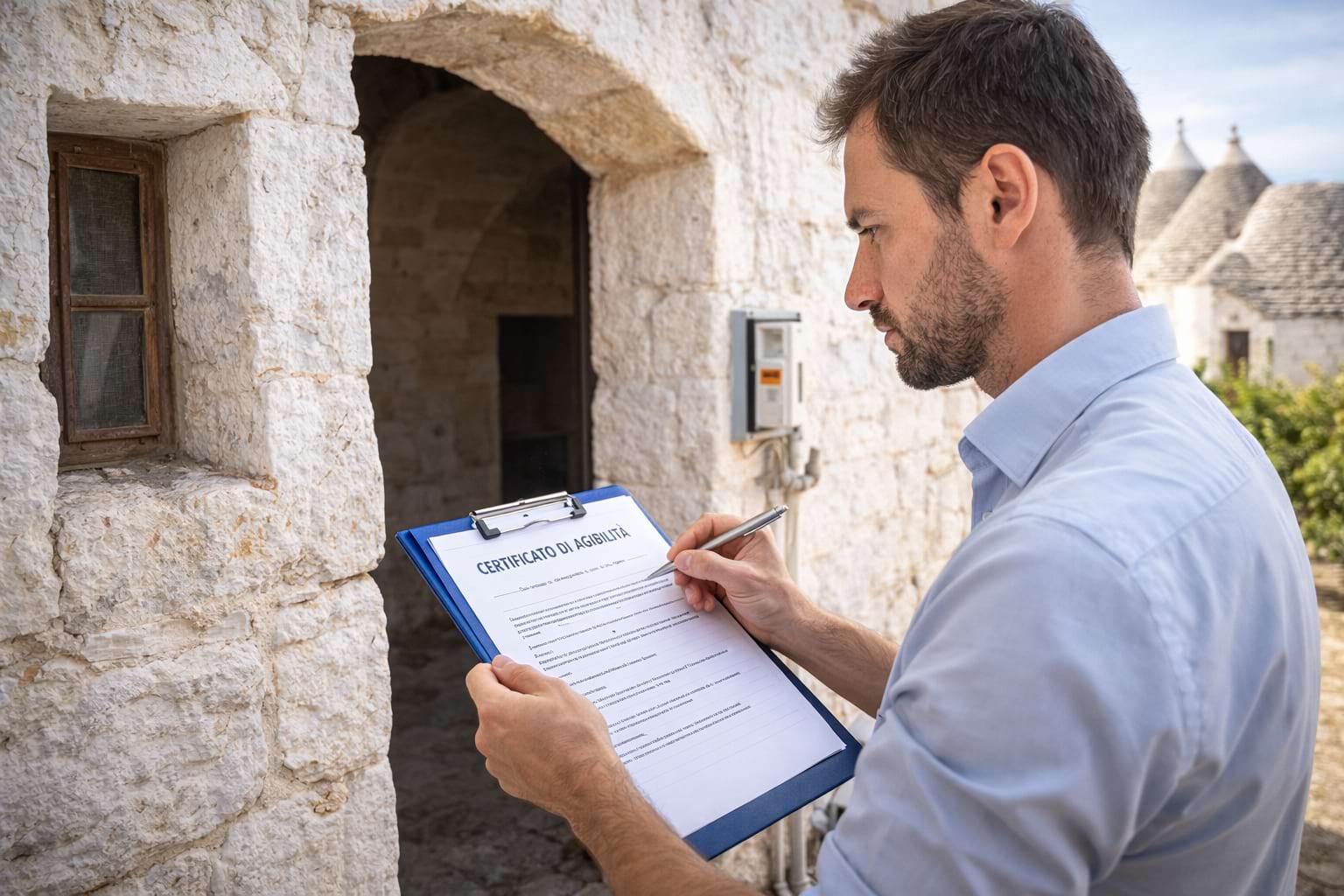


What exactly is the Notary Escrow Account?
Why it matters for foreign buyers in Puglia
Is the Notary Escrow “Deposito del prezzo” different from a downpayment?
FAQ – How the Notary Escrow Account “Deposito del prezzo” protects your investment
So, you’ve found your dream Trullo or a historic villa tucked away in the olive groves. You’ve reached the final step: the Rogito (the final deed). In Italy, this is the moment where everything culminates: you sign, you pay, and the keys are finally in your hands.
But there’s a crucial legal tool that many international buyers discover only at the last minute, and it can save you from a world of stress: the Notary Escrow Account (known in Italy as Deposito del prezzo). The Notary holds your funds in a dedicated account until the deed
is registered. This means you can’t lose money if something goes wrong between signing and registration.
What exactly is the Notary Escrow Account?
In a standard Italian sale, you typically hand over a check or send a wire transfer directly to the seller at the moment of signing. However, under Italian law, you have the right to ask the Notary to hold your funds in a dedicated, ring-fenced escrow account instead.
The Notary, who acts as an impartial public official, keeps your money safe and only releases it to the seller after the deed has been officially registered in the Land Registry. This means your investment stays in a “safe zone” until the Notary confirms that no hidden debts, liens, or last-minute mortgages have popped up between the final checks and the signature.
Why it matters for foreign buyers in Puglia
Puglia is famous for its beautiful, centuries-old properties. But let’s be honest: historic homes often come with a bit of “paperwork history.” Whether it’s an old mortgage that wasn’t properly cancelled or a minor technical irregularity that needs a final verification, the Notary Escrow gives you total peace of mind. You aren’t just paying for a house; you are paying for the certainty that the property is legally yours, free of any burdens.
It is also a particularly practical solution for foreign buyers who do not have an Italian bank account, as the funds can be safely managed through the Notary without the need to open a local account before completion.
Is the Notary Escrow “Deposito del prezzo” different from a downpayment?
Yes, and this is a common point of confusion for international buyers. The “Caparra” (downpayment) is what you pay early on to lock in the deal. The Notary Escrow, however, involves the final balance paid at the closing. It’s the ultimate layer of protection that bridges the gap between signing the papers and the final registration of the title.
At Trulli&Dimore Real Estate, we’ve spent over 20 years guiding international families through the winding roads of Puglia’s real estate market. We know that buying abroad can feel daunting. Using a notary escrow account isn’t just a formal step – it’s a practical way to ensure that everything is properly verified before the payment is released.
If you’re thinking of buying a house in Puglia and need legal support, we’re happy to guide you!
FAQ – How the Notary Escrow Account “Deposito del prezzo” protects your investment
Absolutely. By law, the Notary’s escrow account is strictly separated from their personal or professional assets. It is a protected fund that cannot be seized by any third party, making it one of the most secure ways to handle a large transaction in Italy.
Usually, there is a modest fee for the Notary’s additional work in managing and reconciling the escrow account. In our experience, it is a very small price to pay for the level of protection it offers, especially when you are managing an investment from thousands of miles away.
No. If you, as the buyer, request to use the Notary Escrow Account, the seller must comply. It is your legal right to choose this method to ensure a secure and transparent transaction.
The seller receives payment only after the notary has registered the deed and verified that no issues – such as new mortgages or liens—exist.
Yes. It is particularly useful in complex transactions or investment properties when you want extra security.
Written by Stefania Lisi, Lawyer at Trulli&Dimore Immobiliare.