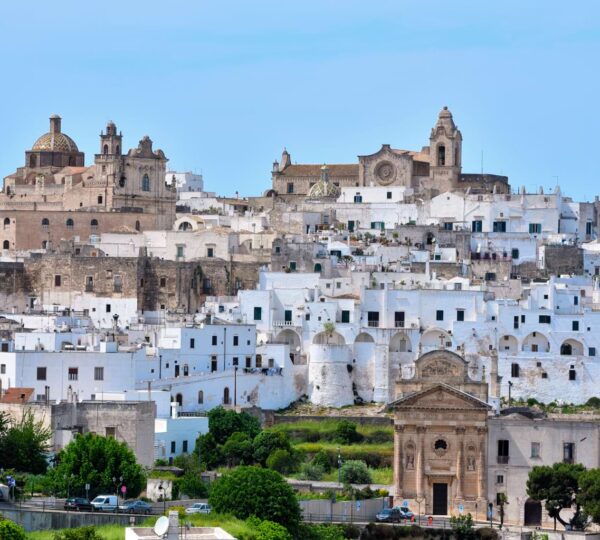
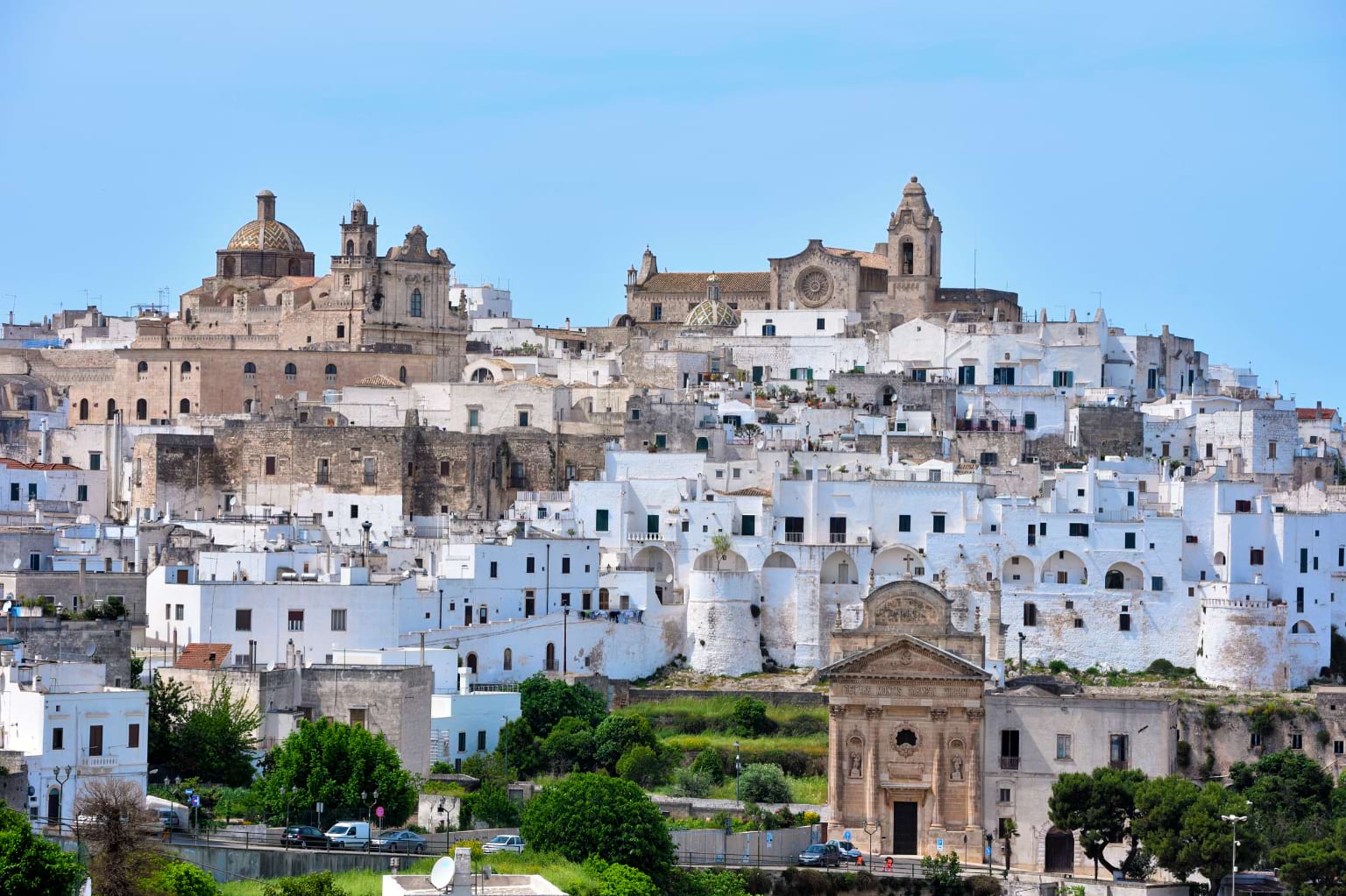
Ostuni sits on a hilltop, its houses washed white with lime. Below the town, olive groves run down to the Adriatic, where a string of small seaside resorts lines the coast.
If you are thinking of buying property in Ostuni, whether to move here for good or to spend your holidays here, this landscape splits into areas with their own rules and values. A house in the old town calls for different checks than a trullo (plural trulli, the dry-stone house with a conical roof typical of this part of Puglia) in the countryside, and the value per square metre changes from one area to the next.
Buying abroad also means following a process that may work differently from the one you know. We have been working in the Puglia property market for more than twenty years, with an in-house legal consultant who follows every purchase from the very start.
Where to buy property in Ostuni: which areas should you know?
The easiest way to get your bearings is to think in four areas: the old town, the inland hills, the countryside towards the coast and the seaside resorts. Which one suits you depends largely on how you plan to use the house.
The old town and central streets
The old town is a maze of lime-washed alleys and stairways. Around it lie the central streets of Corso Vittorio Emanuele and Viale Pola.
In our twenty years in Puglia we have often found that in historic buildings, subdivisions and extensions made over the years do not appear on the cadastral floor plan (planimetria catastale). That is why the paperwork has to be checked against the house room by room.
The inland hills
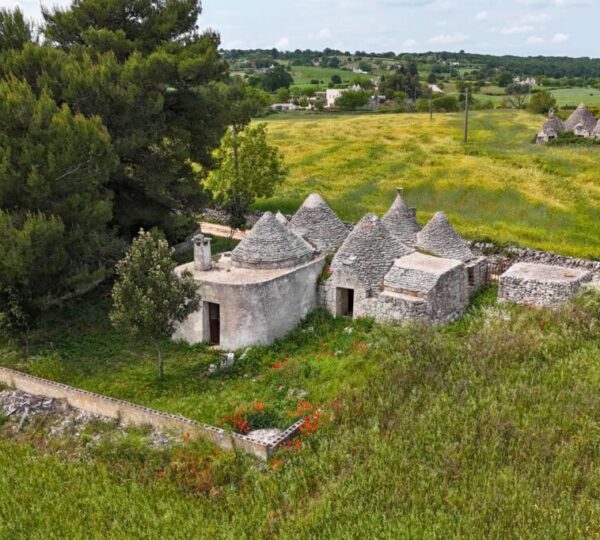
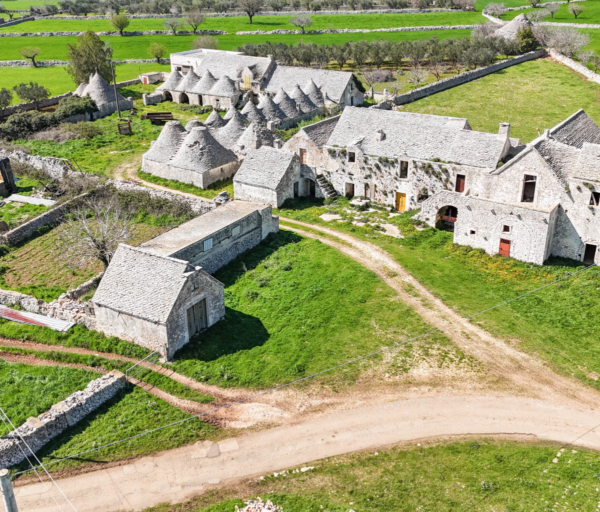
Ostuni’s countryside is divided into contrade, rural districts each with its own name. The inland hills, with contrade such as Monti, Fumarola and Ramunno, are the landscape of trulli, lamie (single-storey stone houses with vaulted ceilings) and stone farmhouses, often surrounded by olive trees.
Buying here almost always means buying a rural building with land. The land and any outbuildings are assessed alongside the house, each with its own cadastral and planning history.
All the contrade where our countryside properties are located are in this inland hill area: Montemichele, Cappelluzzo, Pascarosa, Galante, La Chiusa and La Fica.
The countryside between Ostuni and the sea
Between the town and the coast lies a band of farmland. Here official figures also cover villas in excellent condition, valued above standard homes.
Buying here often means buying agricultural land as well. If the plot borders land farmed by a professional farmer, Italian law may give that neighbour a right of first refusal (prelazione agraria), something to clear before you sign. Our guide to the agricultural pre-emption right explains how it works.
If you are unsure which area a house belongs to, ask us before you book a viewing.
The coast: Villanova, Rosa Marina, Costa Merlata
Ostuni’s coastline has several resorts: Rosa Marina and Pilone, Villanova with Monticelli, Diana Marina and Fontanelle, Costa Merlata and Gorgognolo. Official figures put villas in Rosa Marina and Pilone at the top of the local range, and Gorgognolo at the bottom.
Rosa Marina began in the late 1960s as a private holiday village, and others grew up around it, some run by owners’ consortia (consorzi). If the house belongs to a consortium, read its rules and check the shared costs before making an offer.
How do property values compare across Ostuni?
Every six months the Italian Revenue Agency (Agenzia delle Entrate) publishes official value ranges per square metre for each area of a town. They are a useful benchmark for comparing areas before you start viewing.
| Area | Homes (€ per m²) | Villas (€ per m²) |
| Old town | 1,000–1,350* | – |
| Central streets (Corso Vittorio Emanuele, Viale Pola) | 1,050–1,300* | – |
| Inland hills | 1,600–2,000 | 1,400–1,900 |
| Countryside towards the sea | 1,200–1,600 | 1,500–2,000 |
| Rosa Marina and Pilone | 1,500–2,000 | 2,600–3,700 |
| Villanova, Monticelli, Diana Marina, Fontanelle | 1,300–1,700 | 1,700–2,400 |
| Costa Merlata | 1,300–1,800 | 1,500–2,200 |
| Gorgognolo | 850–1,000 | 950–1,200 |
Sale values for properties in normal condition, first half of 2026. * Basic homes only: the Agency gives no other figure for these areas. No official figure. In the countryside towards the sea, villas in excellent condition reach €2,000–2,200 per m². Source: Agenzia delle Entrate.
Why a trullo is valued on site
These figures describe ordinary homes, and the Agency itself states that only a professional valuation can set the value of an individual property.
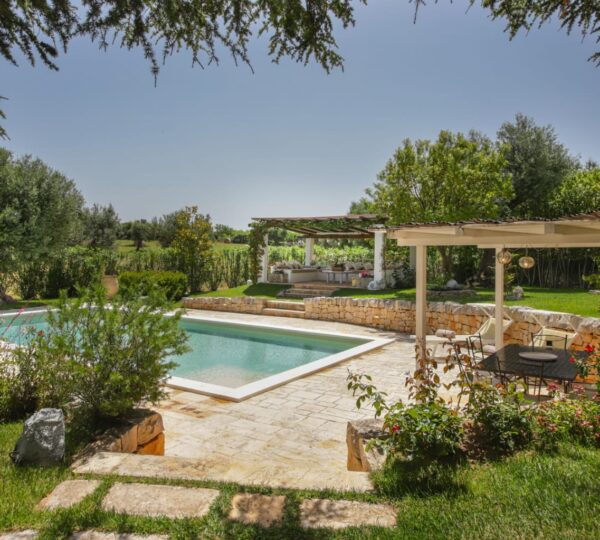
A cluster of trulli in the countryside has features the table does not capture: the number of cones, the state of the chiancarelle (the limestone slabs that cover the cones), the size of the land, and whether the pool and outbuildings are properly authorised. The table helps you compare areas; the value of a trullo is set on site.
How does buying a home in Italy work?
An Italian purchase usually goes through three documents, and the first one already commits you.
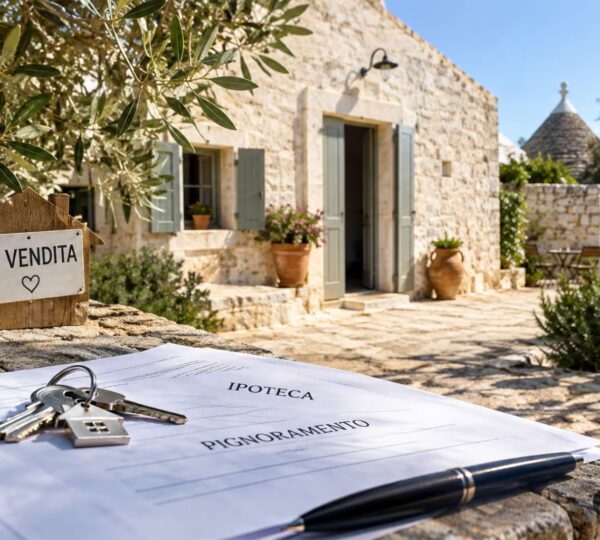
- The proposta d’acquisto is a written purchase offer, usually backed by a deposit. Once the seller accepts it, it binds the buyer. In many countries an offer can still be withdrawn until contracts are signed, so this is the step to handle with the most care.
- The compromesso is the preliminary contract: it sets the price, the deposit and the completion date.
- The rogito is the final deed, signed in front of a notaio.
The notaio is a public official who checks that the deed is legally valid and registers the transfer of ownership. They do not act as the buyer’s personal adviser, which is why many buyers want someone checking the documents on their side well before the deed.
Before signing you will also need a codice fiscale, the Italian tax code. In Italy the agency fee is usually paid by both buyer and seller: ask for the amount in writing at the start.
What should you check before making an offer in Ostuni?
Since an accepted offer is binding, the checks come first, while every option is still open.
Start with the cadastral floor plan, which must match the house as it is today. If paper and reality differ, the difference has to be put right before the rogito.
The second document to ask for is the certificato di agibilità, the certificate confirming the building is fit to be lived in. We cover it in our guide to the habitability certificate in Puglia.
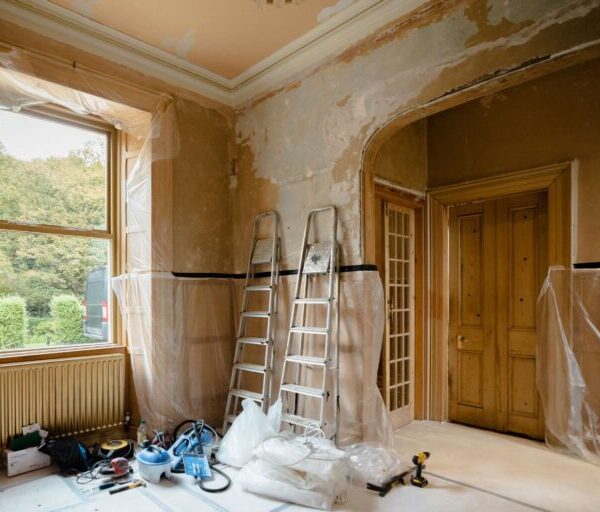
In the countryside, add the building permits for pools, outbuildings and extensions: every structure on the land needs its own. Part of Ostuni’s territory is under landscape protection, and there any work also needs a landscape permit (autorizzazione paesaggistica). This matters if you plan to renovate or add a pool.
Listings marked «con progetto» come with a design for works on the property. What counts is whether the project has already been approved and whether the permit passes to the buyer.
The last check concerns ownership. When there is more than one seller, or the house was inherited, you need the consent of every owner and a clean chain of title. See our guide to buying multi-owner properties in Puglia.
How do we help international buyers buy property in Ostuni?
We start with the area. Before any viewing, we talk through how you will use the house, because someone moving to Ostuni for good and someone looking for a holiday home to let in summer may be looking at different parts of the territory. If you plan to let the house, read our guide to buying a holiday home in Puglia to rent out.
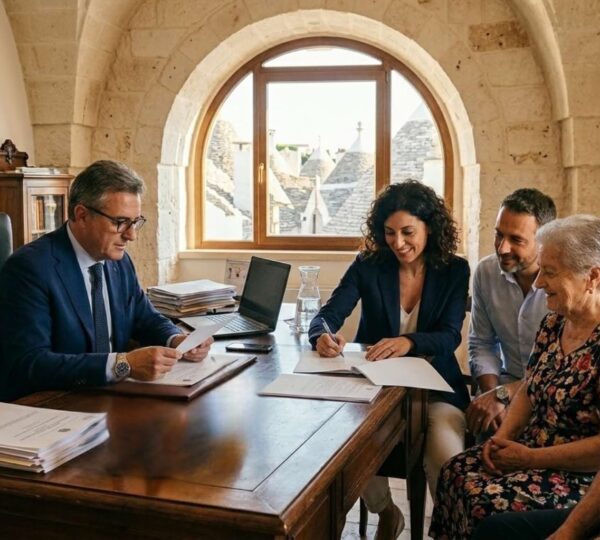
When a property feels right, our in-house legal consultant reviews the documents before you sign the offer. They work alongside you from the start, not once problems have already surfaced.
After the offer is accepted, we stay with you all the way to the rogito. If you want extra protection on the payment, the notaio can hold the purchase price in a dedicated account (deposito del prezzo) until the transfer is completed: our guide to the Italian notary escrow account explains how it works.
We are members of FIAIP, the Italian federation of professional estate agents, and we have long-standing experience with buyers who come to Puglia from abroad.
Buying property in Ostuni means choosing where you watch the sea from: the white rooftops of the old town or a contrada among the olive trees. Our properties in Ostuni are online. If one feels like the start of a new chapter, get in touch and we will go and see it together.
Frequently asked questions: Buying property in Ostuni
Where are the trulli for sale in Ostuni?
Is a purchase offer binding in Italy?
Do I need a codice fiscale to buy a house in Ostuni?
What does «con progetto» mean in an Italian property listing?
When does the legal consultant get involved in a purchase in Ostuni?
Written by the Trulli & Dimore Real Estate editorial team and reviewed by Anna Sardella, property consultant and CEO of Trulli & Dimore Real Estate.