Understanding the Italian purchase structure
Can a foreign buyer get a mortgage in Italy?
How the Italian mortgage process works
How much can a foreign buyer borrow?
How long does it take to get a mortgage in Italy?
What about second homes or renovation projects?
Why technical compliance is especially important in Puglia
Why local support matters
FAQ – Getting a mortgage in Italy as a foreign buyer
If you’re considering buying property in Italy, one of the first practical questions you’ll face is: how do I get a mortgage in Italy as a foreign buyer?
The good news is that Italian banks do lend to foreigners, including non-residents. The process is not necessarily more difficult than in the US or UK — but it is different. And understanding those differences is essential, especially if you’re planning to buy in a region like Puglia, where many purchases are second homes or lifestyle investments.
Understanding the Italian purchase structure
In Italy, the mortgage is legally finalized at the same time as the Deed of Sale (Rogito), which is signed before a notary (Notaio).
Before reaching that stage, buyers usually sign a Preliminary Contract (Compromesso), which legally commits both parties to the transaction.
If financing is required, the purchase offer or preliminary agreement may include a Mortgage Contingency Clause (Clausola sospensiva per mutuo), which protects the buyer in case the loan is not approved.
These legal steps are central to understanding how to get a mortgage in Italy as a foreign buyer — because financing is directly linked to the contractual timeline.
Can a foreign buyer get a mortgage in Italy?
Yes. Non-residents can apply for what is commonly referred to as a Non-Resident Mortgage (Mutuo per non residenti).
Approval depends on two key factors:
- The borrower’s documented income and financial stability
- The property’s appraised value and legal compliance
Unlike in some countries where income is the dominant factor, Italian banks give substantial weight to the official Property Appraisal (Perizia bancaria).
This means the property itself must meet strict urban planning and cadastral requirements before the bank issues final approval.
How the Italian mortgage process works
Once you identify a property and structure an offer, the mortgage process typically unfolds alongside the transaction.
After submitting financial documentation, the bank appoints an independent surveyor for the Perizia (Bank Valuation). Only after both your financial profile and the property pass evaluation does the bank issue final approval.
The mortgage contract is then signed simultaneously with the Rogito before the notary.
Because of this interdependence, financing must be aligned with contractual deadlines from the very beginning.
How much can a foreign buyer borrow?
International clients often ask how much financing is available. While conditions vary by lender and profile, non-resident buyers are generally required to contribute a higher down payment compared to residents. Italian banks typically finance a percentage of the appraised value, not necessarily the agreed purchase price.
It’s also important to remember that transaction costs – such as taxes, notary fees, and professional fees – are not included in the mortgage amount.
Understanding this structure early helps avoid surprises during negotiations.
How long does it take to get a mortgage in Italy?
From application to approval, the process typically takes between two and four months. The exact timeline depends on how quickly the required documents are provided and translated—banks often require sworn translations of several documents, such as tax returns and bank statements—as well as on how smoothly the property appraisal progresses.
When buying in Puglia, coordination is particularly important. Sellers, notaries, and banks must align on timing, and delays can occur if documentation is incomplete or if the property requires technical clarification. Advance preparation significantly reduces these risks.
What about second homes or renovation projects?
Many foreign buyers in Puglia are not purchasing a primary residence, but rather a second home, a vacation property, or a traditional building such as a trullo or masseria.
Financing for second homes is possible, though lending conditions may differ slightly from primary residence loans. If the purchase includes renovation plans, banks may require additional documentation and a clear project outline before approving financing.
In these cases, having local guidance becomes even more valuable, especially when dealing with historic or rural properties.
Why technical compliance is especially important in Puglia
This is particularly relevant in Puglia. Many foreign buyers are attracted to traditional properties such as Trulli and Masserie. While architecturally unique, these buildings often have complex construction histories.
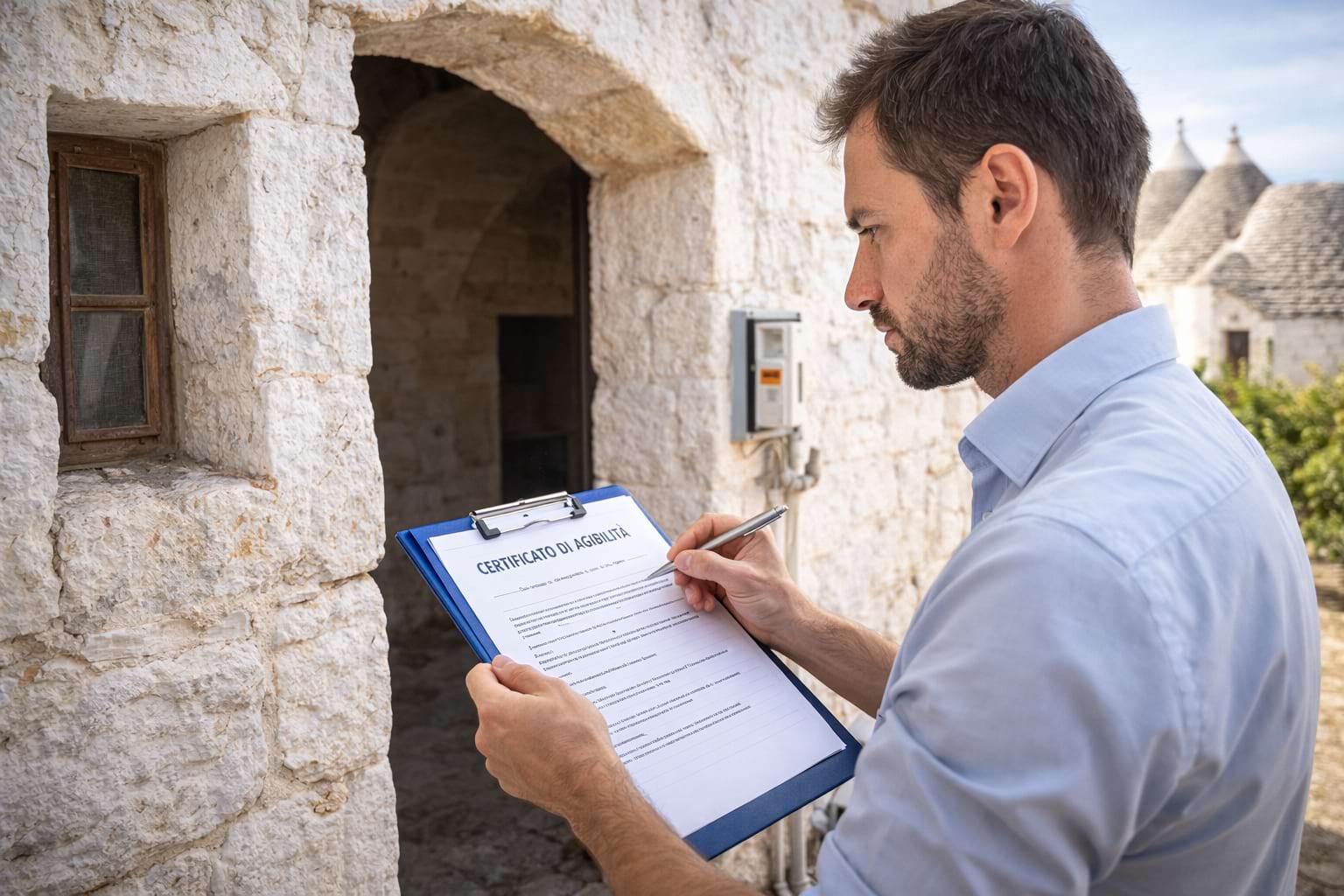
In these cases, Technical Compliance (Conformità urbanistica e catastale) can be more intricate than with modern apartments or recently built homes.
Before the bank’s appraisal takes place, it is essential to verify that:
- The property matches official cadastral records
- Any past renovations were properly authorized
- No structural or planning irregularities exist
In our agency’s experience, conducting a technical pre-check before submitting a mortgage application significantly reduces the risk of delays during the appraisal phase. This step is especially critical when purchasing rural or historic properties in Puglia.
Why local support matters
While a real estate agency does not provide financial advice, it plays a crucial role in making the mortgage process smoother.
For foreign buyers navigating Italian procedures for the first time, the biggest challenges are often not financial — but procedural. Property compliance checks, contract structure, coordination with the notary, and communication with mortgage professionals all need to be managed carefully.
Working with an experienced local agency like us (Trulli&Dimore Real Estate) in Puglia means having someone who understands both the property market and the rhythm of Italian transactions, helping ensure that financing integrates seamlessly into the purchase process.
FAQ – Getting a mortgage in Italy as a foreign buyer
Yes. Foreign income is accepted, provided it is stable, verifiable, and properly documented.
No. Non-residents can apply for a mortgage, although lending conditions may differ from those offered to residents.
The Rogito is the final deed of sale signed before an Italian notary. It legally transfers ownership of the property and is typically when the mortgage is finalized.
The Compromesso is the preliminary contract that commits buyer and seller before closing. It can include a mortgage contingency clause.
Yes. The bank’s appraisal verifies both value and legal conformity. Any discrepancies between the property and official records may delay or prevent approval.
Not necessarily, but these properties often require more detailed technical verification due to their age and construction history.
Getting a mortgage in Italy as a foreign buyer is entirely possible — but it requires timing, documentation, and coordination within the purchase process.
If you are considering buying property in Puglia and want clarity on how financing fits into your acquisition strategy, working with a local team like us (Trulli&Dimore Real Estate) that collaborates with experienced mortgage professionals can make the entire process more transparent and manageable.