

How the 2026 Renovation Tax Credit works
Can non-residents apply 2026 Italian home renovation tax incentives?
Which renovation works are eligible?
Payment Requirements: the bonifico parlante
Documentation foreign owners must keep
Why investing in Puglia is a smart long-term choice
FAQ – Italy Renovation Tax Credit 2026
Ready to renovate your property in Puglia?
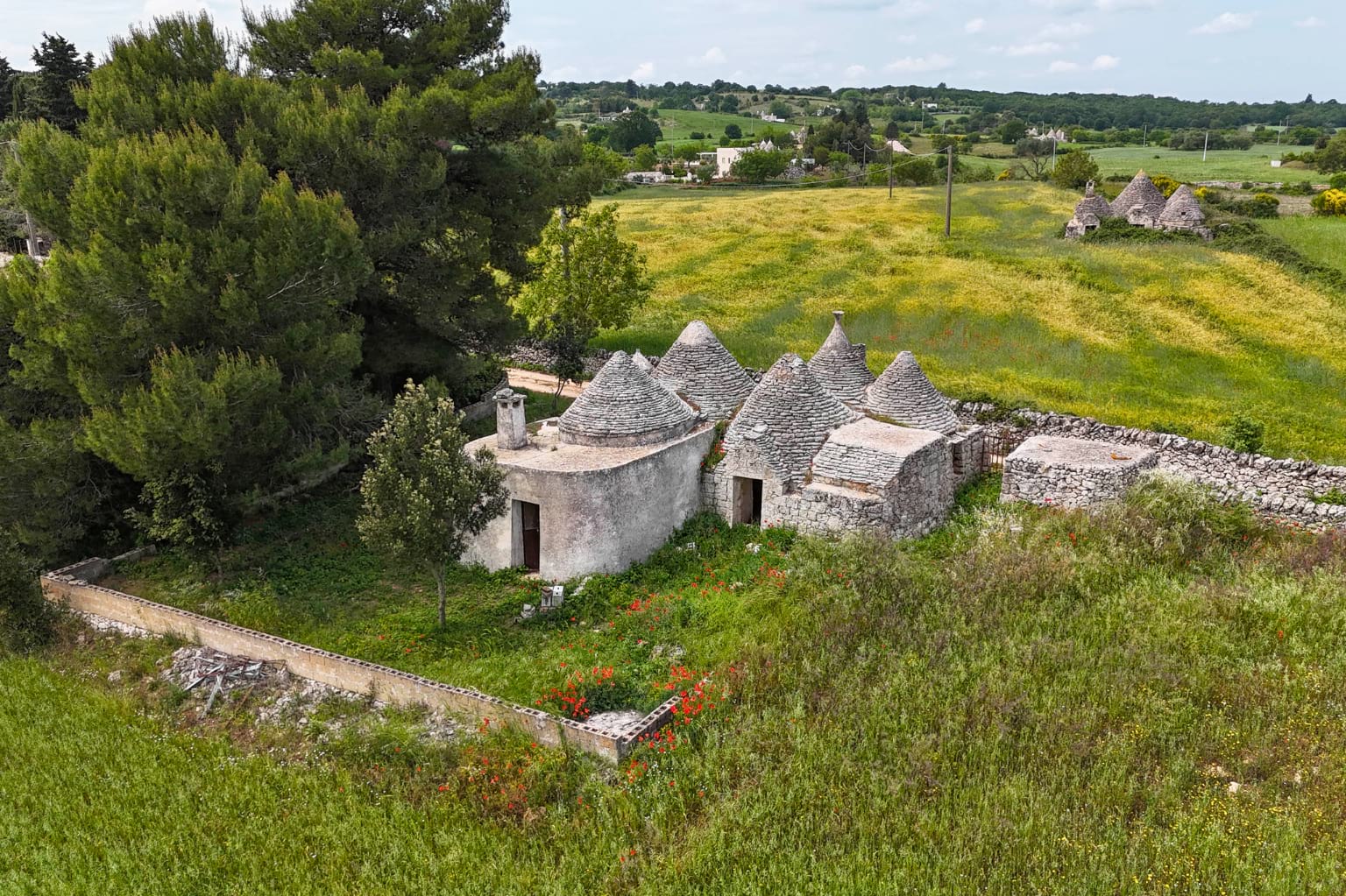
Whether you’re restoring a trullo, reviving a masseria, or updating a sea-view apartment in Monopoli, the Italy Renovation Tax Credit 2026 – or Bonus ristrutturazione 2026 in italian – can significantly reduce your costs.
This tax benefit remains one of Italy’s most accessible renovation incentives, offering up to 50% in deductions. For international buyers, it’s a chance to protect and enhance the value of a property in one of the most desirable regions of the Mediterranean.
How the 2026 Renovation Tax Credit works
Italy confirms two deduction rates for 2026: 50% for properties used as a primary residence and 36% for second homes — the most common category for international buyers.
Understanding the distinction between primary and secondary homes is crucial for foreign owners:
- Primary Residence (Prima Casa): 50% deduction
To qualify, the property must be your official residence where you and your family live habitually. For non-residents, properties in Italy typically cannot be considered primary residences, meaning most foreign owners will access the 36% rate. - Secondary Home (Seconda Casa): 36% deduction
This applies to vacation homes, investment properties, or any property that isn’t your primary residence. Most foreign property owners in Puglia fall into this category.
The benefit applies to up to €96,000 per property, spread across ten years.
This means that long-term owners can offset a substantial portion of their renovation costs. The credit is deducted from your Italian Personal Income Tax (IRPEF). If your taxable income in Italy is low (e.g., only from cadastral rental value), the annual deduction may be partially or completely unusable. This means the deduction must primarily be claimed through the annual tax declaration over ten years.
Important 2027 Update: From January 1, 2027, these rates will decrease to 36% for primary homes and 30% for secondary properties unless extended. This makes 2026 an optimal year to undertake renovations.
Can non-residents apply 2026 Italian home renovation tax incentives?
The Italian Tax Revenue Agency (Agenzia delle Entrate) has confirmed that foreign citizens, whether residing in Italy or abroad, can access renovation tax credits as long as they own residential property in Italy. This applies equally to:
- EU and Non-EU citizens owning property in Italy
- Italian citizens living abroad (registered with AIRE)
- Anyone generating taxable income in Italy
The key requirement is property ownership and the generation of Italian-source income. Even the property’s cadastral income (rendita catastale)—a notional rental value assigned to all Italian properties—can qualify you, meaning ownership alone may be sufficient.
Because many international buyers are not familiar with Italian tax regulations, we at Trulli & Dimore Real Estate frequently assist clients in coordinating with trusted accountants and legal internal teams, making the entire process smooth and compliant.
Which renovation works are eligible?
Most restoration and improvement works typically required in Puglia qualify for the credit.
This includes structural repairs, restoration of stone walls and vaulted ceilings, trullo dome reconstruction, system upgrades, energy improvements, and internal reconfigurations.
Payment Requirements: the bonifico parlante
Italy requires a specific payment method to qualify for renovation tax credits. All payments to contractors and suppliers must be made through a bonifico parlante (speaking bank transfer)—a special bank transfer that includes: Legal reference: “art. 16-bis del DPR 917/1986” Invoice number and date Your tax code (Codice Fiscale) Contractor’s VAT number (Partita IVA) Automatic 8% withholding tax applied by the bank Example Payment Description: “Renovation art. 16-bis DPR 917/1986 – Invoice no. 45 dated 15/03/2026 – Plumbing system – Tax ID: RSSMRA80A01A662K – VAT: 12345678901” Cash payments, regular checks, or standard bank transfers do not qualify. Most Italian banks offer “bonifico per ristrutturazione” as a standard option in online banking.Documentation foreign owners must keep
The documentation required is fully manageable but must be handled with precision.
You will need invoices, bonifici parlanti, planning permissions (CILA, SCIA, etc.), ENEA documentation for energy works, and compliance certificates.
Many of our international clients appreciate having a local point of reference, and our real estate agency provides on-the-ground support to coordinate architects, contractors, and accountants, so nothing gets lost between countries, languages, or time zones.
Why investing in Puglia is a smart long-term choice
Beyond tax savings, renovations in Puglia enhance both property value and enjoyment:
Value appreciation: Restored properties in prime areas like Valle d’Itria, Salento, and Gargano can increase 40–60% in value, often exceeding renovation costs even without tax benefits.
Rental income potential: With Puglia’s booming tourism, renovated homes command premium rental rates.
Personal enjoyment: Renovations turn dated properties into modern, comfortable retreats while preserving their historic charm.
Heritage preservation: Restoring traditional buildings contributes to the region’s cultural legacy, offering satisfaction beyond financial gains.
FAQ – Italy Renovation Tax Credit 2026
Yes. Foreign owners can use it as long as they have taxable income in Italy.
Yes, the Codice Fiscale is essential. Our consultants at Trulli & Dimore Real Estate can help you with that.
No. Only Italian-registered contractors qualify.
Yes. Without it, expenses are not deductible.
Usually, the remaining benefit transfers to the buyer unless otherwise agreed.
1. Incorrect Payment Methods
2. Starting Work Before Permits
3. Insufficient Italian Tax Liability
4. Poor Documentation
5. Missing ENEA Deadlines
6. Ignoring Local Building Regulations
Foreign retirees may qualify for Italy’s 7% flat tax regime if relocating to small municipalities in Puglia, though this precludes using renovation tax credits on the same income.
Ready to renovate your property in Puglia?
Renovating a home in Italy from abroad can feel complex — but with the right guidance, it becomes a structured, enjoyable, and rewarding experience.
At Trulli & Dimore Real Estate, we offer specialised consultancy for international buyers, assisting with property selection, renovation planning, contractor coordination, project supervision, and the full fiscal/legal pathway to secure the Italy Renovation Tax Credit 2026.
Contact Trulli & Dimore Real Estate for a personalised consultation and bring your Puglian home vision to life with a trusted local team.